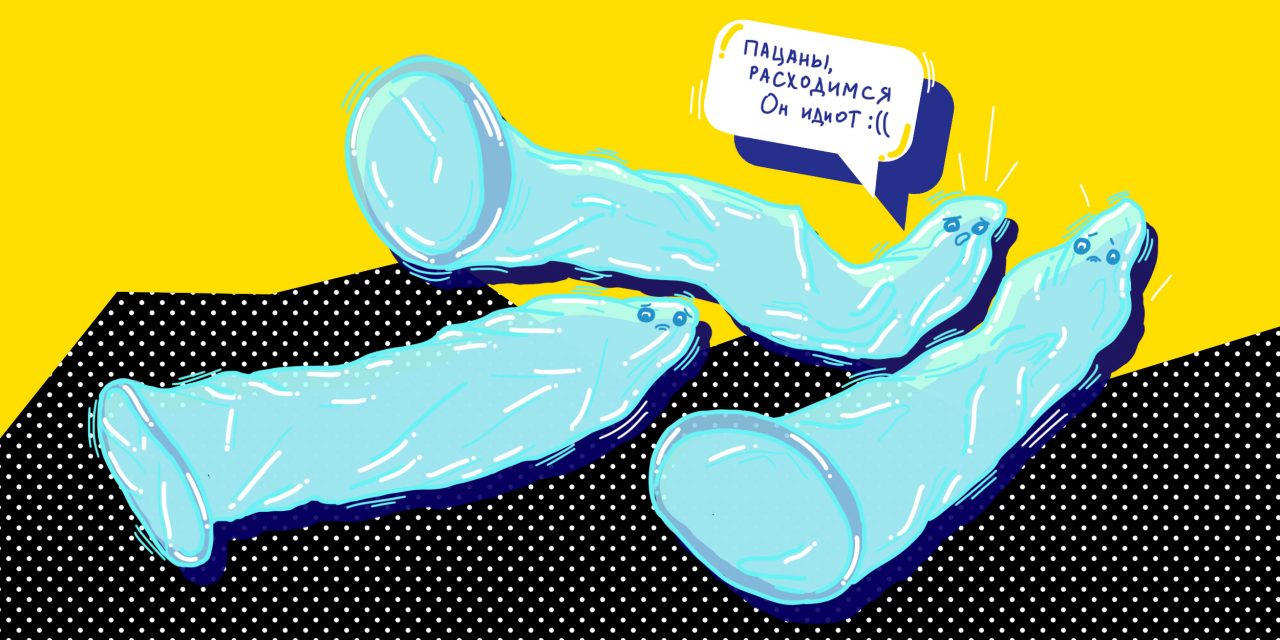
1. Unplanned Pregnancy
It's better to prepare for conception. This increases the chances that the baby will be born healthy, and its mother and father will not suffer from sudden financial and other problems.
Neither the calendar method nor withdrawal are full-fledged means of contraception. Alternatives to condoms can only be sterilization, intrauterine devices, or contraceptive pills. However, they will not protect you from infections.
2. Itching and Discharge
Statistics are relentless: every year, sexually transmitted infections affect millions Condoms and Sexually Transmitted Diseases of men and women. Moreover, in most cases, it does not matter what kind of sex - vaginal, oral, or anal - the infected had.
Chlamydia, gonorrhea, syphilis, HIV, trichomoniasis, human papillomavirus (HPV), herpes, hepatitis B and C, and other diseases are transmitted sexually.
STIs are insidious. They can manifest themselves not immediately, but after several days, months, and even years after unprotected contact.
Their symptoms and consequences Sex activities and risk are diverse, but early symptoms often resemble Sexually transmitted infections (STIs) . These include itching, burning during urination, and abundant discharge from the vagina or penis.
If you notice something similar, be sure to consult a gynecologist or urologist and get tested for flora. Further treatment will depend on the diagnosis.
3. Chronic Pain
STIs, in most cases, cause inflammatory processes in the genital organs. In the acute phase, inflammation can manifest as fever, pelvic pain, and purulent discharge.
If the infection is not treated, it will become chronic. As a result, the pain may become permanent.
4. Difficulties with Conception
After the acute phase of inflammation, adhesions may form in the internal genital organs. This is the name given to areas of excessive connective tissue growth. They are not dangerous in themselves, but they can block the normal flow of fluids.
For example, adhesions inside the fallopian tubes cause them to become blocked. As a result, the fertilized egg simply cannot enter the uterus, meaning a healthy pregnancy will not occur. However, an ectopic pregnancy may happen. With all its negative consequences.
Adhesions in the testicular appendages in men will lead to sperm not reaching the seminal fluid. This means that conceiving a child will not be possible.
5. Problematic Pregnancy
Some pathogens of STIs, such as syphilis, penetrate through the placenta and can provoke the development of physical defects in the fetus, premature birth, or miscarriage.
6. Need for Emergency Surgery
Inflammatory processes in STIs are usually minor, but there can be complicated cases. For example, in ascending gonorrhea in women, pus may drain from the fallopian tubes and cause one type of peritonitis Gonorrhea . Such conditions are life-threatening and require immediate surgical intervention.
7. Cancer
Human papillomavirus can increase the risk Does HPV cause cancer? of developing certain types of cancer. These include cervical cancer and oncological processes affecting the vagina, penis, anal canal, as well as the oral cavity and throat.
The development of HPV can often be determined visually. If papillomas or other skin formations appear in the genital area, be sure to get tested for the virus. If the diagnosis is confirmed, seek antiviral treatment.
8. Liver Diseases
This is a possible consequence of hepatitis B and C. Hepatitis is a insidious disease. Its acute phase is often blurred, and it can easily be mistaken for SARS or just mild malaise.
When the disease progresses to a chronic form, the virus multiplies for months and even years without visible symptoms. But eventually, it destroys liver cells and leads to cirrhosis or cancer.
9. AIDS
Over time, HIV destroys a person's immune system. This leads to acquired immunodeficiency syndrome — a deadly AIDS.
By the way, such STIs as herpes and syphilis increase the likelihood of contracting the HIV virus threefold or more Sexually transmitted infections (STIs) . The thing is that infections cause inflammation — an ideal environment for the virus to multiply. In addition, STIs can lead to ulcers that facilitate the penetration of HIV into the bloodstream.
10. Brain and Internal Organ Damage
Syphilis is one of the most dangerous sexually transmitted infections Syphilis . It can be cured with a short course of antibiotics, but for this, the disease must be noticed. And that can be complicated.
The incubation period of the disease is up to 6 weeks. When the first symptoms appear, you may not even remember that you had unprotected sex. Moreover, the symptoms do not appear dangerous:
- small painless sores on the genitals, around the anus, in the mouth;
- mild red rash on the palms or soles;
- white spots in the mouth;
- increased fatigue, tiredness;
- slight fever;
- swollen lymph nodes.
All this can easily be overlooked or explained by something else. Fatigue — by stress and overexertion at work, temperature — by a mild SARS, the rash — by an allergy to something eaten.
Then the symptoms may even disappear. But syphilis progresses to a chronic form and gets to work: it gradually destroys the bone and nervous systems, including the brain and spinal cord, as well as internal organs. The consequences can be extremely dangerous and irreversible.
Even in the asymptomatic period, a person remains contagious, meaning that during unprotected sex, they can pass syphilis to an unsuspecting partner.
11. Early Death
This is the end of the development of various STIs — from human papillomavirus to HIV or syphilis. How much time will pass between unprotected contact and death is unpredictable. The timing depends on the individual settings of a person's immune system.
What to Do If You Still Want to Take Risks
If for some reason you do not want or cannot use a condom (let's assume you have them — objective and insurmountable), strictly follow the basic safety rules.
- Choose a reliable method of contraception. Preferably — together with a doctor.
- Engage in sex only with one partner. The more "other halves" you have, the higher the risk of contracting STIs.
- Before the first intimacy — any kind, even oral — get checked by a gynecologist or urologist and get tested for sexually transmitted infections.
- Be sure to repeat the examination and tests in 2-3 months. Some STIs have a prolonged incubation period during which the infection cannot be detected.
- Get examined regularly, at least once a year. Just in case your partner is cheating on you.
- If you have symptoms of STIs, make sure to see a doctor and inform your partner. This is not the time to be shy. Health and even life depend on honesty.