How ejaculation occurs
Ejaculation is the expulsion of sperm from the penis. Seminal discharge consists of two phases Normal male sexual function: emphasis on orgasm and ejaculation :
- emission, during which the body produces sperm and pushes it "out";
- expulsion, when the prepared seminal fluid is expelled from the penis.
Each of these phases has its own characteristics. Knowing them can help better understand what exactly a man feels during sexual intercourse and what determines orgasm.
Emission phase
It occurs when a man experiences sexual arousal. Physical touches or even sexual fantasies change the hormonal background. This leads to the seminal ducts beginning to contract, working like small pumps. They extract sperm from the testicular appendages, where it is stored.
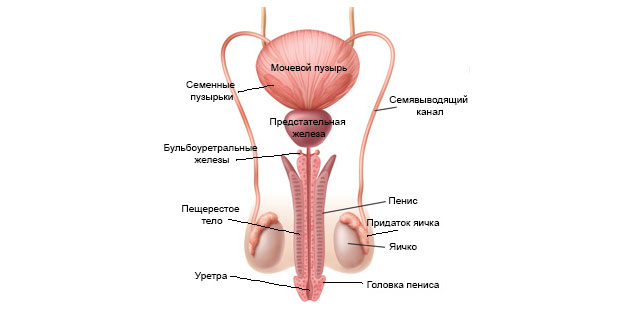
Sperm travels through the so-called ejaculatory tract, mixing with fluid from the seminal vesicles, prostate, and bulbourethral glands. This creates seminal fluid — ejaculate.
The entire process is controlled by Normal male sexual function: emphasis on orgasm and ejaculation the sympathetic (autonomic) nervous system. This means that a man, despite his desire, cannot control it.
Expulsion phase
This is the direct exit of sperm through the urethra to the outside. In this case, the "pump" is the bulbospongiosus muscle located at the base of the penis. It rhythmically contracts, pushing the semen out, and each contraction is accompanied by a feeling of intense pleasure — orgasm.
During the initial, most powerful contractions, the most sperm is expelled from the urethra, so the sensations are the strongest. Then the amount of semen decreases, and the pleasure fades away.
The expulsion phase can be partially controlled. Once the first contraction of the bulbospongiosus muscle occurs, ejaculation is already inevitable. But before that, a man can, through willpower, hold back the movement of the muscle — thus postponing ejaculation. This can prolong sexual intercourse.
What you need to know about ejaculation
Here are a few interesting facts about this important element of sexual life.
Ejaculation is fast
The average speed at which the penis "shoots" sperm is about 45 kilometers per hour Dr. Peter Scardino’s Prostate Book: The Complete Guide to Overcoming .
Ejaculation is far
The muscles responsible for the expulsion of seminal fluid are so strong that some men can ejaculate up to a meter away Ejaculation and Male Fertility . However, this is still in the realm of records. On average, sperm is expelled at a distance of 17–25 centimeters Human Sexual Response .
Ejaculation is somewhat excessive
The volume 20 Things You May Not Have Known About Semen of seminal fluid that is released during a single sexual act is 1.5–5 milliliters. This is approximately equivalent to the capacity of a teaspoon.
However, the amount of sperm is not related Relation Between Sperm Count and Semen Volume, and Pregnancies Obtained During a Twenty‑Year Follow‑Up Period to its quality, meaning the ability to fertilize an egg. Even a minimal volume of seminal fluid contains sperm and can make a man a father.
Ejaculation is separate from orgasm
Ejaculation and orgasm, although they often go hand in hand, are actually independent Normal male sexual function: emphasis on orgasm and ejaculation physiological processes.
Ejaculation can sometimes occur without orgasm: a simple example is nocturnal pollution. Orgasm can occur without ejaculation: this type is called dry.
To repeat ejaculation, time is needed
Sperm in the male body does not end after ejaculation How Many Times Can Someone with a Penis Come in a Row? : there is enough for at least several dozen sexual acts in a row. However, most often time is needed for rest and recovery. This period, when a man cannot either achieve an erection or ejaculate, is called the refractory period.
Its duration is individual. In young people, it does not exceed several minutes. In older people, it stretches to a day.
According to some data, the refractory period after traditional sexual intercourse lasts longer Everything You Need to Know About the Refractory Period than after masturbation.
There are lucky ones whose this stage is hardly noticeable Male Multiple Ejaculatory Orgasms: A Case Study : they are able to continue having sex after ejaculation and ejaculate again and again. However, cases of male multiple ejaculations (or multiple orgasms) are still rare and not sufficiently studied.
21 ejaculations a month may reduce the risk of prostate cancer
At least, this is what the results of a large-scale study suggest Ejaculation Frequency and Risk of Prostate Cancer: Updated Results with an Additional Decade of Follow‑up , which involved 32 thousand men. Researchers followed the health of volunteers for almost two decades. They found that those men who ejaculated 21 times a month or more had the lowest rates of prostate cancer.
However, these results are just statistics. They are difficult to verify: researchers cannot claim that all respondents told the truth about their frequency of sexual contacts.
There are no definitive data on how often a man should ejaculate to remain healthy. Scientists only agree on one thing: to have sex and finish as many times as you like.