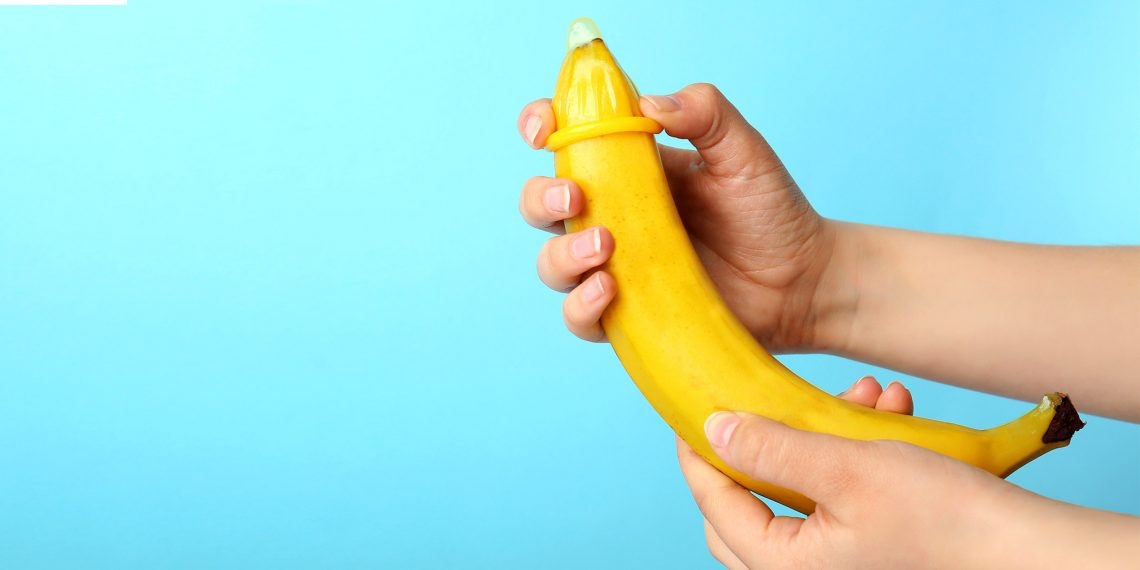
A couple of wrong actions - and there is a risk of catching an infection or becoming a father.
Is the condom generally a reliable means of contraception?
It is very effective if used correctly and regularly. Incorrect use of this contraceptive significantly reduces its effectiveness in preventing pregnancy - from 98 to 82% - and nullifies protection against STIs.
It's all simple here, is it really possible to use it incorrectly?
Oh yes. Ideally, the condom should be correctly sized, put on before each sexual act, used only with suitable lubricants, and removed immediately after ejaculation. But in practice, everything turns out differently. "Someone decides to put on a condom in the middle of sexual intercourse, only 'on dangerous days' for the partner or does not change the condom for a second sexual act," notes urologist Daria Chernysheva.
Many believe that the main thing is to prevent sperm from entering the vagina directly during ejaculation. However, Dr. Vanessa Cullins from the American Family Planning Federation specifies that the condom should be put on before the penis touches the vulva (that is, even the labia). According to her, fluid is released from the penis before and after ejaculation. These secretions can contribute to the transmission of infection and even lead to pregnancy.
Here are a few more mistakes that we make most often.
Incorrect size selection
If the condom is too loose on the penis, it can easily shift or ejaculate fluid may leak out and enter the woman's reproductive tract. To avoid this, choose the right size for you.
The length of the condom varies: you can unroll it as much as you need. Therefore, the length of a standard condom fits most men. However, if desired, you can find out the ideal parameters for yourself. For this, you need to take a ruler, place it at the pubic bone at the base of the penis, and measure the distance to the tip of the glans.
But the circumference of the penis is not so straightforward. Here’s what the doctor recommends:
You can take a piece of string and use it to measure the circumference at the base of the erect penis. Then straighten this string and measure it with a ruler. The resulting number will be your guideline for the size of the condom.
The internet will also help you in selecting the right size. There are many websites where you can find size calculators and tables with parameters of popular condoms in Russia.
Dr. Chernysheva notes that for approximately 30% of men, the standard size of condoms is large. But this is not the men's problem, but the manufacturers, who focus on astronomical figures.
There is nothing shameful about looking for a suitable and well-fitting condom rather than settling for what is sold in the nearest supermarket. We are all different, and that’s okay. Only through searching can one find the right model for themselves.
Did not leave space at the tip of the condom
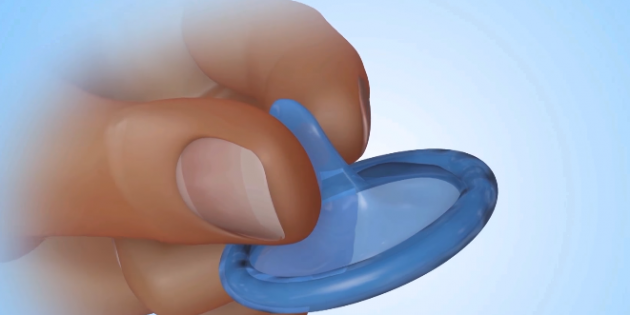
This reservoir collects the released sperm. If you did not squeeze the tip with your fingers when putting it on, you didn’t leave space there and did not expel the air. In this case, there is nowhere for the seminal fluid to gather - it will spread along the penis.
Removed the condom too late
Erection in most men weakens quite quickly after ejaculation. So, a condom that fit tightly on the erect penis becomes too loose - sperm may leak into that space.
Did not read the instructions on the package
Yes, condoms come with instructions, and this is important because trendy products in green with a banana flavor or five kinds of bubbles may not be intended for contraception or protection at all. And this is indicated on the packaging. In small print.
Okay. How then to put on a condom correctly?
1. Find out your size (the focus should be on width).
2. Read the condom label before purchasing. It may not be suitable for contraception.
3. Do not use the condom if the packaging is opened, damaged, or has expired.
4. Use the condom before any contact of your penis with someone else’s genitals.
5. Open and remove the condom carefully, without squeezing it with your nails.
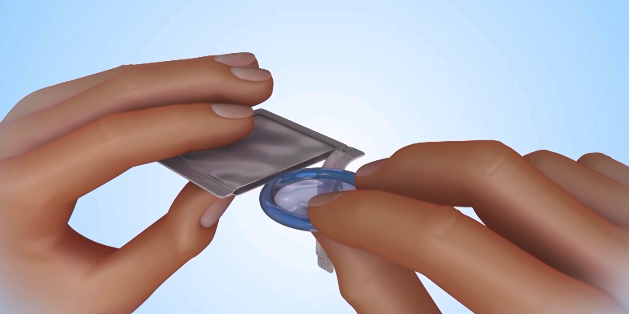
6. Take the condom by the tip and squeeze it to leave room for the sperm.
7. Drop a little water-based lubricant inside the condom if you think it's necessary.
8. Pull back the foreskin, if there is one.
9. While continuing to hold the tip of the condom, unroll it down the penis to the desired length.
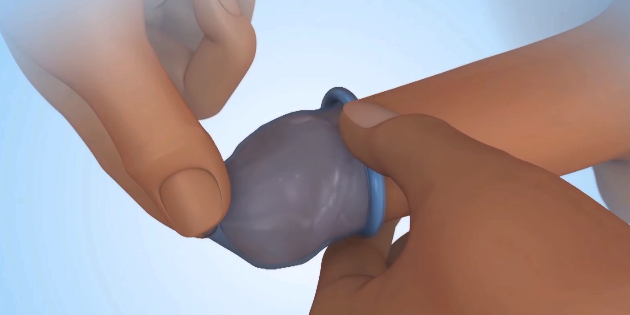
10. Stop any movements if the condom slips or breaks. Remove it immediately and replace it with a new one.
11. Change the condom with each new approach (reinsert of the penis after ejaculation).
12. Change the condom if you decide to engage in a different kind of sex (oral or anal). For each new hole - a new condom.
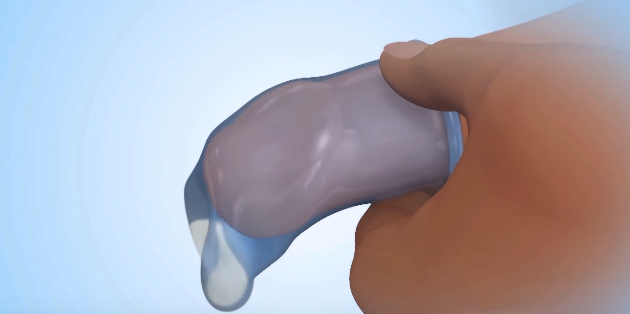
13. Withdraw the penis as soon as possible after ejaculation, holding the condom at the base of the penis to avoid spilling sperm.
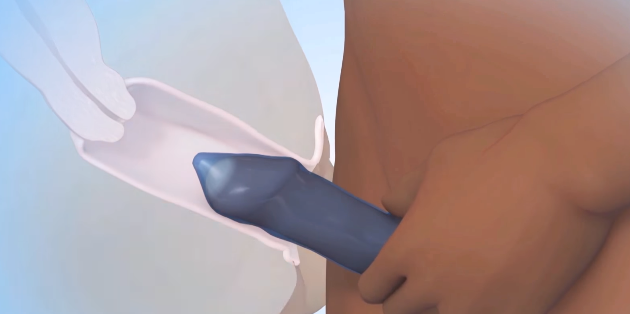
14. Carefully remove the condom, still trying not to spill sperm.
Is lubricant always needed with a condom?
Many condoms already have lubricant on the outside. But it wouldn't hurt to add more, including inside. The main thing to remember is that oils and oil-based lubricants are incompatible with latex condoms. They destroy latex. It is best to use water-based lubricants.
What to do if there is an allergy to latex?
According to Daria Chernysheva, about 5–10% of people may have an allergy to latex, from which most condoms are made.
Manifestations of allergy vary: from redness and irritation to attacks of suffocation and loss of consciousness. If you notice discomfort, itching, rash, redness of the genital organs (and in your partner too) during or immediately after using a latex condom, it is better to refuse such condoms in the future and switch to polyurethane or polyisoprene.
American experts recommend switching to female polyurethane condoms for latex allergies. According to them, most people with a latex allergy switch to natural condoms made from the intestines of animals, which do not protect against HIV as well as others.
Does the condom affect erection?
It does, but indirectly, as sensitivity can sometimes decrease. There is no data that the condom causes erectile dysfunction.
Men sometimes experience what are called condom-associated erection problems: it decreases or completely disappears before or immediately after putting on the condom.
The reasons have not yet been identified, but it is likely that the issue lies not with the condoms, but with the peculiarities of the psychology and physiology of men who have experienced such problems.
For all other men, the erection may temporarily disappear due to the condom only if the size is not properly matched: too tight, painful, constricting, difficult to put on, and so on. It is enough to find a comfortable condom to eliminate such inconveniences. It’s better to spend time on this than to face STIs or unwanted pregnancy.